November 26, 2025
If you’re experiencing severe toothache, sensitivity, swelling or discomfort when you bite, you might be wondering whether you need a root canal.
It’s a common dental treatment that helps save natural teeth, relieve pain and stop infection. And with modern techniques and a focus on patient comfort, it’s also far more comfortable than many people expect.

Church View Dental is a modern, family-run practice offering a full range of treatments under one roof, so you benefit from advanced technology and seamless care in a single convenient location. Our friendly team is dedicated to making every patient feel welcome and at ease throughout their visit.
If you’re looking for gentle, reliable root canal treatment in Essex, our experienced dentists provide comfortable, effective care for patients across Upminster, Hornchurch, Cranham, Romford, Harold Wood, Rainham and Brentwood. We also offer specialist endodontic care for more complex cases, tailoring our approach to each individual tooth.
This guide explains everything you need to know about endodontics, root canal treatment - and what to expect during your visit.
Endodontics is the area of dentistry that focuses on the inside of the tooth, including the dental pulp and root canals. The dental pulp contains nerves and blood vessels. When the pulp becomes inflamed or infected - often through decay, a deep filling or trauma - endodontic treatment is used to clean the area, remove the infection and save the natural tooth.
The most common endodontic procedure is root canal treatment.
Each tooth has one or more root ‘canals’ - small hollow spaces inside the roots that contain the dental pulp. When this pulp becomes infected or damaged, dentists clean and reshape these canals as part of treatment. The name “root canal” simply comes from the part of the tooth being treated, not the procedure itself.
Root canal treatment removes bacteria and infected tissue from inside your tooth, relieves pain and stops the infection from spreading. Its purpose is to save your natural tooth and restore comfortable, healthy function.
You might need a root canal if you have:
These symptoms can be signs of inflammation or infection inside the tooth. They are commonly caused by tooth decay, deep fillings or trauma. Delaying treatment can allow the infection to spread, so prompt dental care is important.
If you’re unsure, we’ll carry out a full dental assessment and confirm whether a root canal is the best option.
A root canal helps to:
With good oral hygiene, a treated tooth can last for many years. Keeping your natural tooth in place also supports long-term oral health.

At Church View Dental, we focus on calm, comfortable care at every stage. Here’s what your treatment journey looks like.
We examine your tooth and may take digital X-rays to understand the extent of the infection.
We’ll review your X-rays with you and explain your treatment options clearly.
Local anaesthetic is used to fully numb the area. A small rubber dam is placed around the tooth to keep it dry, clean and protected throughout the procedure.
The infected pulp is removed and the canals are cleaned, shaped and disinfected using modern, precise instruments. Some teeth, especially molars, have more complex root canal anatomy, so we take extra care to clean and disinfect every part of the canal system.
Once the canals are ready, they are filled with a specialist material to prevent infection returning. In some cases, a medicated dressing may be placed inside the canals between visits to ensure the tooth remains bacteria-free. If a final crown or filling can’t be placed straight away, a temporary restoration will protect the tooth in the meantime.
A crown may be recommended for long-term strength and stability.
Mild tenderness is normal for a short time and usually settles quickly. Any post-treatment discomfort can be managed with simple care and advice. We’ll monitor your healing and let you know when the tooth is ready for its final restoration. Once complete, the tooth should feel and function normally again.
Some teeth need the expertise of a specialist endodontist, especially if:
For these cases, specialist endodontic treatment provides greater precision and a predictable outcome. Some of our clinicians have a special interest in endodontics, offering advanced skills and experience for complex root canal care.
If specialist treatment is recommended, you can access it directly here at our Upminster dental practice.
This is one of the most common concerns patients have - and we completely understand - however, with modern local anaesthetic, gentle techniques and a calm approach, root canal treatment is usually no more uncomfortable than having a filling. We aim to keep your treatment as comfortable and as pain free as possible. Most patients are surprised by how straightforward the experience feels.
If you feel nervous, we take everything at your pace. Sedation options are available if you need extra reassurance.

Most treatments take between 60 and 90 minutes, but the exact time depends on the number of canals and the complexity. Some procedures can be completed in a single visit, while others require two visits to ensure thorough cleaning and sealing. Any numbness or tenderness afterwards usually settles within a short time.
We believe in clear, transparent pricing - costs vary depending on the type of tooth, but our current root canal treatment costs start from £350.
Flexible finance plans are available to help spread the cost.
Patients visit us for Essex root canal treatment from:
“Can root canal treatment be completed in one visit?”
“How long does root canal treatment last?”
“Is root canal treatment always necessary for an abscess?”
“Can I go back to work after root canal treatment?”

Whether you need routine root canal treatment in Upminster or specialist endodontic care, our team is here to help you feel comfortable, supported and confident in your smile.
For urgent dental care or to book an appointment, please contact our reception team or submit an enquiry through our website.
Book your appointment today and take the first step towards comfortable, healthy teeth.
Become a Church View Dental member today

A full dental assessment is the only way to diagnose the best treatment for an affected tooth. In some cases, root canal treatment is the only effective way to remove bacteria from the dental pulp and protect the tooth long term. If the inflammation is caused by decay, trauma or deep filling, we’ll discuss this during your consultation. We’ll examine your tooth carefully, take X-rays if needed and guide you through the safest option for your natural teeth here at our Upminster dental practice.
After root canal treatment, the tooth can be weaker because infected tissue has been removed from the canals and the pulp chamber. A crown protects the treated tooth, restores strength and supports comfortable biting and chewing. Depending on the condition of the root canal system, a root filling may need a second visit before the crown is placed. A temporary filling is sometimes used to keep the tooth safe while we plan the final restoration.
Most patients feel comfortable again within a day or two after root canal treatment. Mild discomfort is normal and usually settles within hours. You can eat and drink normally once the local anaesthetic has worn off. If your tooth needs a second visit for sealing or a crown, we’ll discuss the timing at your appointment. Good aftercare supports smooth healing and long-term success.
In most cases, yes. Choosing root canal treatment helps you keep your natural teeth, maintain your bite and avoid replacement options such as dental implants. Extraction is generally only recommended when a tooth cannot be restored. Saving your tooth also helps protect surrounding teeth and avoids some of the changes that can follow extraction, such as shifting teeth or gaps. Many patients prefer this approach and find the procedure more comfortable than expected.
Delaying root canal treatment usually allows the infection to spread, which can increase severe pain, cause swelling, or lead to an abscess. In some cases, the tooth may become too damaged to save, and bone loss can also develop around the root. This may affect neighbouring teeth or lead to problems such as missing teeth later on. Early endodontics helps relieve pain and prevents the problem becoming more complex, so timely treatment is always recommended.
Yes. Root canal treatment removes the bacteria inside the affected tooth that cause abscesses. This helps relieve pain, reduces the risk of the infection returning and prevents it spreading to nearby gums or bone. In more advanced cases, antibiotic treatment may assist the healing process. We’ll always let you know if the abscess is linked to the pulp, trauma or deep decay, and whether a general dentist or specialist endodontist is best placed to manage it.
Slight sensitivity or tenderness is normal for a short time after root canal treatment, but this usually improves quickly. Persistent pain isn’t typical. If anything feels unusual, our warm and supportive practice team is always here to help. Once the infection has been removed from the root and canals, most patients feel much more comfortable. If needed, we can liaise with other dentists involved in your care to make sure everything is fully understood.
A specialist endodontist may be recommended if your tooth has very curved or narrow canals, has been treated before, or needs microscope-assisted care. Specialist endodontics is often the best approach for re-treatment or complex cases. Some of these cases are referred from other dentists, while others come to us directly. If specialist treatment is recommended, you can access it here at our Upminster clinic, with all care provided under one roof for convenience.
01708 220563
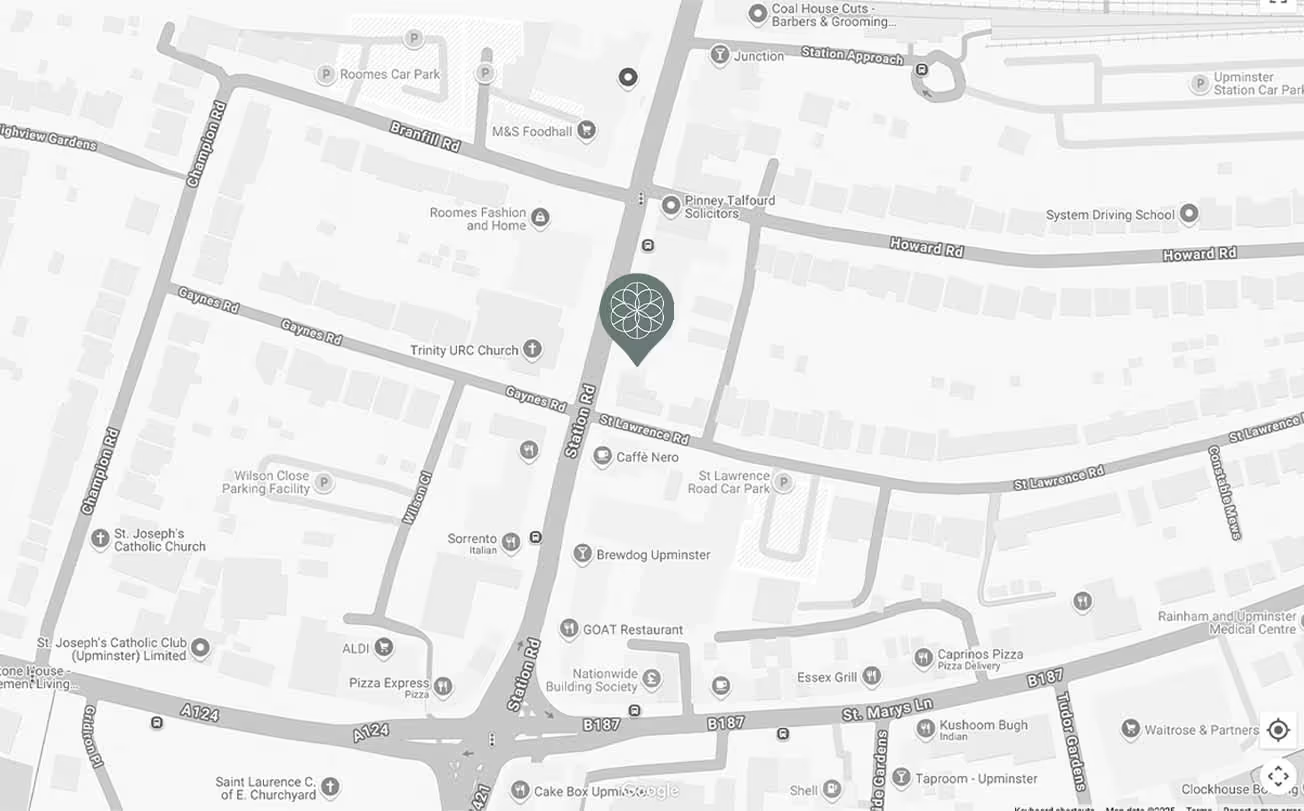
34a Station Rd,
Upminster,
RM14 2TR
Mon
Tue
Wed
Thu
Fri
Sat
Sun
9:00am - 6:00pm
9:00am - 6:00pm
9:00am - 6:00pm
9:00am - 7:00pm
9:00am - 4:00pm
9:00am - 1:00pm
Closed


Copyright Church View Dental 2025
This website was last updated on 13/08/2021 at 09:23