February 11, 2026
If you’re exploring ways to straighten your teeth discreetly, without visible wires, and searching for 'braces behind teeth near me', you might have come across the idea of lingual braces.
It’s a phrase many people use when they’re looking for something discreet to straighten their smile, especially as an adult, but it’s not always clear what it actually means. In simple terms, braces behind the teeth are one of several invisible or low-visibility teeth straightening options. They work differently from clear aligners, such as Invisalign, and aren’t suitable for everyone, but for the right person, they can be an effective and discreet solution.

Interest in subtle teeth straightening - including braces behind the teeth - has grown in recent years, partly because they’re sometimes mentioned in the media when public figures talk about discreet orthodontic treatment. For example, Love Island host Maya Jama has spoken about having lingual braces fitted behind her teeth as part of a smile makeover.
While this has helped raise awareness, it’s important to remember that braces behind the teeth are a clinical treatment. Whether they’re suitable depends on tooth position, bite, and long-term dental health, rather than appearance alone. This guide explains what braces behind the teeth are, how they work, and who they tend to suit. We’ll also touch on how they compare with other invisible braces, so you can understand all your orthodontic options before deciding what to explore next.
When people talk about invisible braces, they’re usually referring to orthodontic treatments that straighten teeth and improve your smile without obvious metal brackets on the front of the front.
The term doesn’t describe one specific treatment. Instead, it’s a general way of talking about braces and orthodontic treatment that are designed to be less noticeable in everyday life, particularly when speaking or smiling.

Invisible braces can include:
Braces behind the teeth fall into this 'invisible braces' category because they sit on the inner surface of the teeth rather than the front. For many adults, this makes them an appealing option for straightening their smile when appearance matters at work or in social settings.
Another discreet fixed option is ceramic braces, which use tooth-coloured or clear brackets fitted to the front of the teeth. These are less noticeable than traditional metal braces, although they are still visible at close range. Ceramic braces may suit people who want a fixed brace but don’t need the brackets to be completely hidden.
As with any orthodontic treatment, suitability depends on tooth position, bite, and long-term dental health.
Braces behind the teeth are clinically known as lingual braces and are a type of fixed orthodontic treatment fitted to the inside surfaces of the teeth. In principle, they work in a similar way to traditional fixed braces, but with one key difference - the brackets and wire sit on the inside of the teeth rather than the front.
Because of this:
Lingual braces are custom-made to fit the shape of each tooth. The inside surfaces of teeth vary more than the front, which means careful planning is essential. Small brackets and a fine wire apply gentle, steady pressure, gradually guiding the teeth into a healthier position.
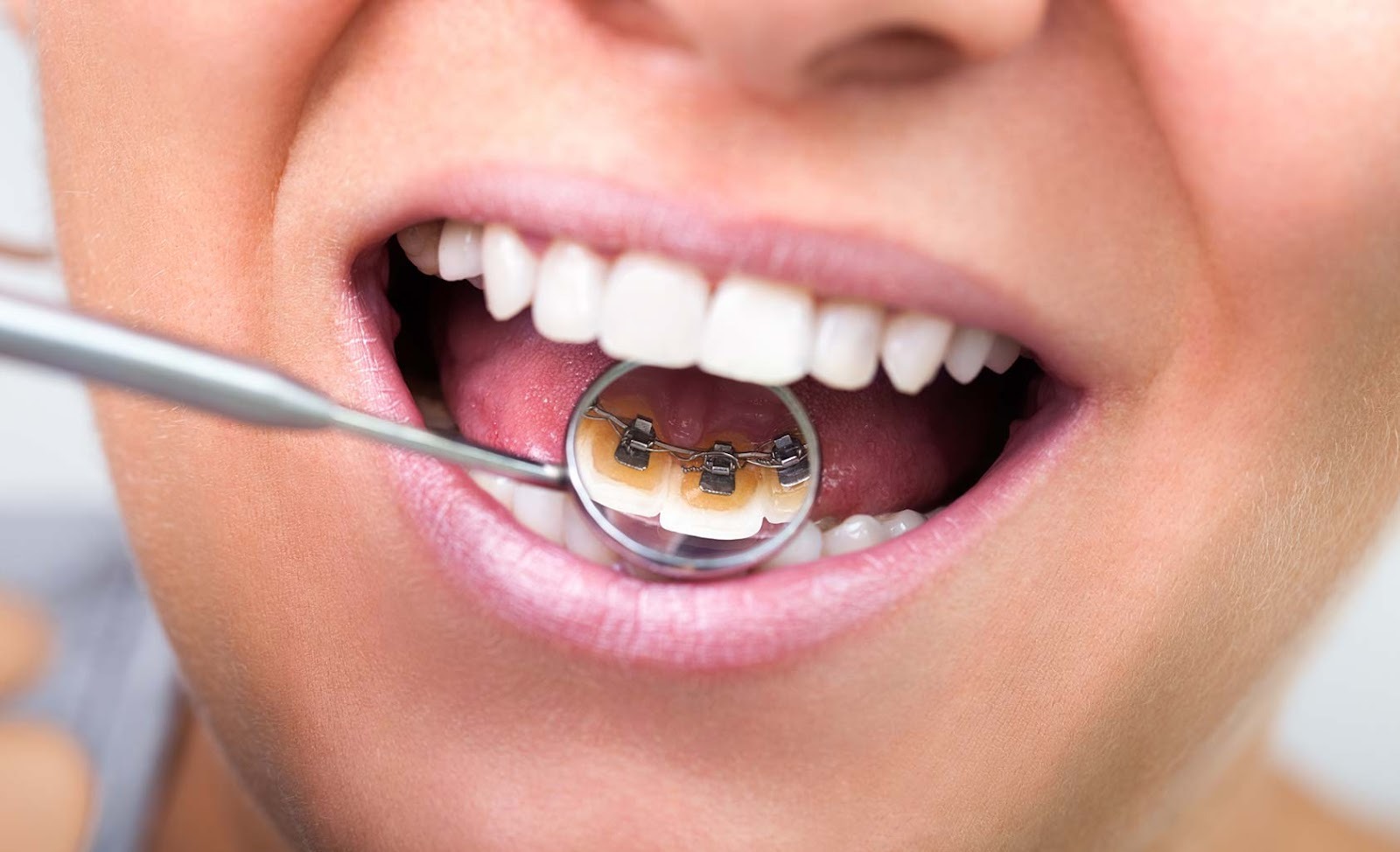
One of the main benefits of braces behind the teeth (lingual braces) is that they work discreetly in the background. Because the brackets and wire sit on the inside surfaces of the teeth, they are hidden from view when you smile or speak.
As a fixed orthodontic treatment, braces behind the teeth work continuously and don’t need to be removed for eating or cleaning. This can appeal to people who prefer a more hands-off approach and don’t want to rely on remembering to wear removable aligners.
The benefits of braces behind the teeth are mainly linked to discretion, continuous treatment, and not needing to remove appliances day to day. For the right person, this combination offers a subtle and effective way to straighten teeth.
Lingual braces are most often chosen by adults who want a subtle approach to teeth straightening. They can be suitable for mild to moderate alignment issues, including crowding or spacing, but they are not right for every case.
They may suit you if:
They may not be suitable if:
A consultation allows your dentist to assess your teeth, bite, and goals, and to explain whether braces behind the teeth are a sensible option for you.
Lingual braces and Invisalign are both considered discreet teeth straightening options, but they work in very different ways.
Lingual braces:
Invisalign:
Some people prefer the flexibility of aligners, while others feel more comfortable with a fixed option that works in the background. The right choice depends on your lifestyle, preferences, and clinical needs, which is why personalised advice is important.

Braces behind the teeth are one option, but they are not the only discreet way to straighten teeth. There are different types of braces that straighten teeth subtly, including fixed braces, removable aligners, and discreet options designed to be less noticeable. Many people are looking for ways to straighten their teeth without making changes that are immediately visible, often described online as “invisible teeth” treatments.
Depending on your situation, alternatives may include:
Each option has its own advantages and limitations. A professional assessment helps ensure you’re considering treatments that are appropriate for your teeth, rather than simply choosing the least visible option.
At Church View Dental in Upminster, our expert cosmetic dentist will talk patients through discreet teeth straightening options carefully and honestly. Not everyone who asks about braces behind the teeth will be suitable, and that’s completely fine.
Our role is to explain what’s possible, what isn’t, and what would work best for your teeth and smile goals in the long term, so you can make a decision that feels right for you and gets the most natural, effective results.

We believe everyone should have access to a straighter smile. That’s why we offer flexible finance plans to help spread the cost of lingual braces.
Book an appointment to discuss your options and find out more
Become a Church View Dental member today

Yes, braces can be fitted to the inside surfaces of the teeth, these are known as lingual braces and are designed to straighten teeth discreetly.
No, lingual braces are a fixed system attached behind the teeth, while Invisalign uses removable clear aligners. Both are discreet, but they work in different ways.
Some people notice temporary speech changes at the start of treatment. This usually improves as the mouth adapts.
Yes, braces behind the teeth are clinically known as lingual braces. The term “lingual” refers to the inside surface of the teeth, where the brackets and wire are fitted.
Yes, they are most commonly used by adults who want a subtle orthodontic option. Lingual braces are often used to improve alignment caused by crowding or crooked teeth. Suitability depends on tooth position, bite, and individual needs.
They are called lingual braces - the term “lingual” refers to the inside surface of the teeth, where the brackets are placed.
The cost of lingual braces varies depending on complexity and treatment length. Lingual braces are usually more expensive than standard braces because they are custom-made. A consultation is the best way to understand likely costs for your situation.
Braces behind the teeth work in a similar way to traditional fixed braces. When suitable, they can be just as effective at moving teeth into healthier positions. The best results depend on careful planning, regular reviews, and choosing the right treatment for your individual needs.
Maya Jama has confirmed that she previously had lingual braces, which are braces fitted to the inside surfaces of the teeth. Because they sit behind the teeth, they are less visible from the front when smiling or speaking. While public figures talking openly about orthodontic treatment has increased awareness of braces behind the teeth, suitability always depends on individual tooth position, bite, and long-term dental health.
Yes, patients often enquire about braces behind the teeth at practices in and around Upminster. At Church View Dental, we regularly see patients from Upminster and nearby areas such as Hornchurch, Romford, Brentwood, and across Havering. If you’re searching for braces behind the teeth near you, a consultation helps confirm whether this option is suitable and what alternatives may also be worth considering.
01708 220563
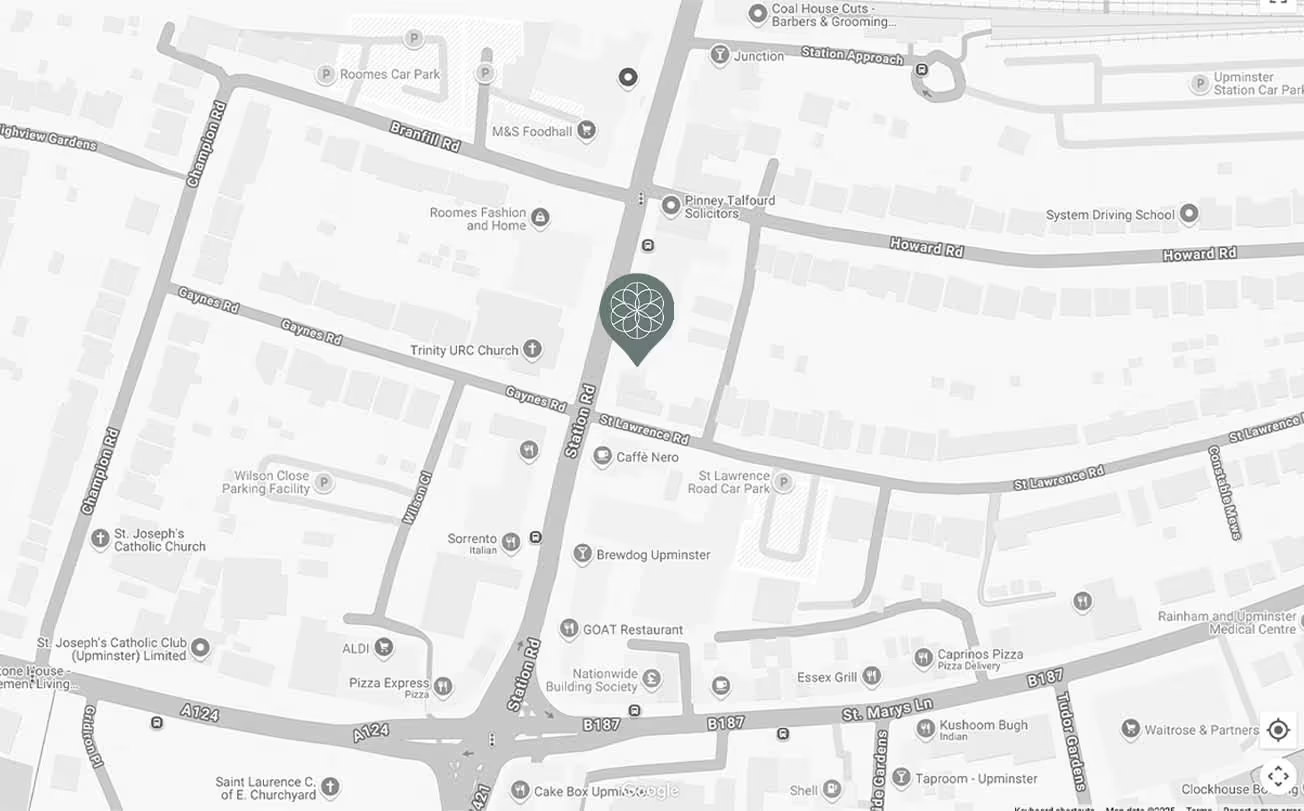
34a Station Rd,
Upminster,
RM14 2TR
Mon
Tue
Wed
Thu
Fri
Sat
Sun
9:00am - 6:00pm
9:00am - 6:00pm
9:00am - 6:00pm
9:00am - 7:00pm
9:00am - 4:00pm
9:00am - 1:00pm
Closed


Copyright Church View Dental 2025
This website was last updated on 13/08/2021 at 09:23